
A consultancy that stopped re-typing its own numbers
About the client
Litch Consulting works in modelling and data analytics. The engagement covered both the public site and the console the team runs on internally.
The problem
Litch tracked its work in separate documents: requests in one, invoices in another, and reports made by copying figures between them. Every copy was a chance for a number to drift, and a modelling and analytics firm cannot have its own figures disagree.
The screens
Step through the product the way the people using it see it. The product screens use sample data, so no client records are shown.
Dashboard
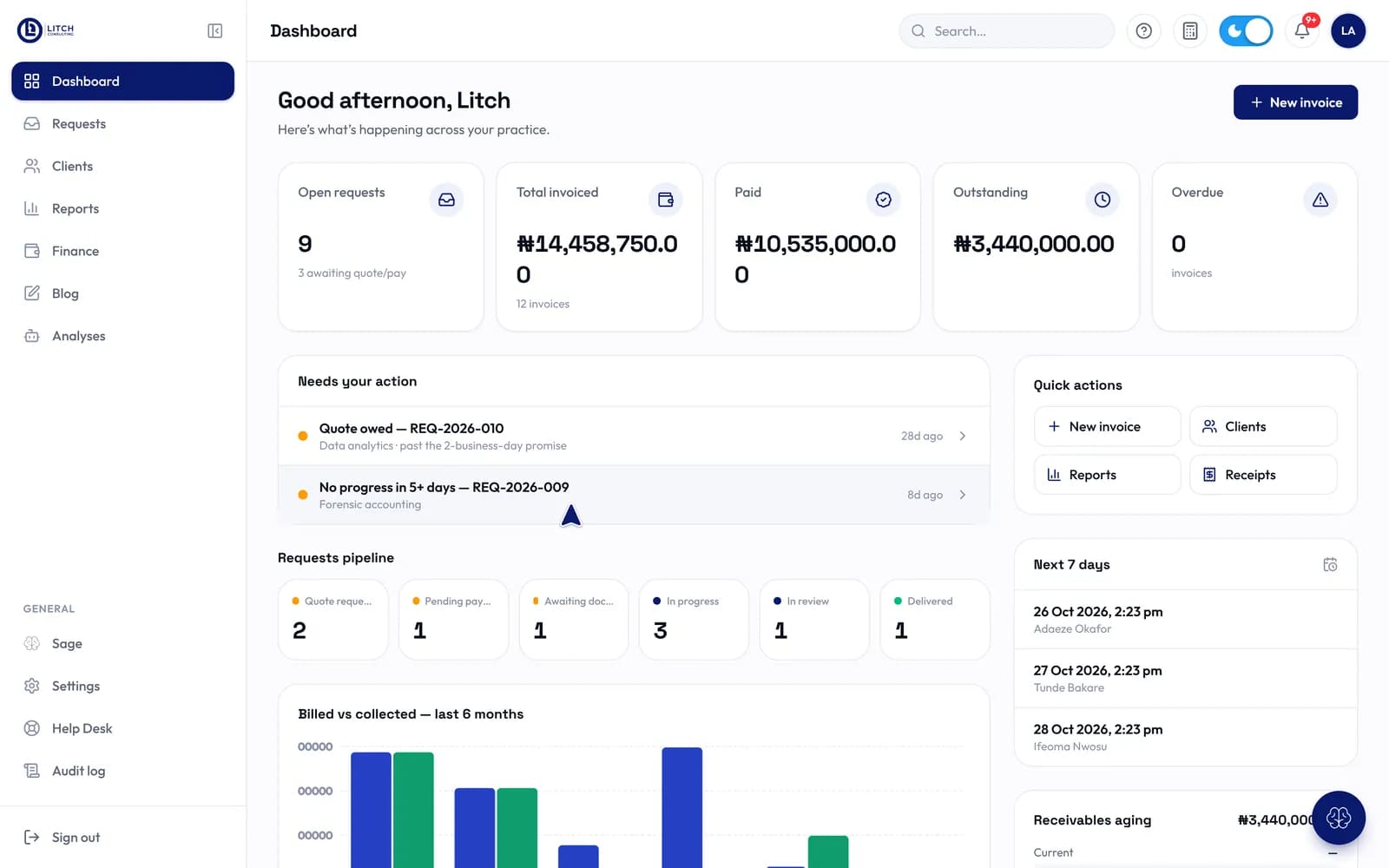
Open requests, invoiced, paid and outstanding, what needs action, the request pipeline, and billed against collected.
The public site

In motion
What we decided
One data model under the whole console. A service request, the invoice raised against it and the figure in a report are the same record read three ways, so a number is typed once and is right everywhere.
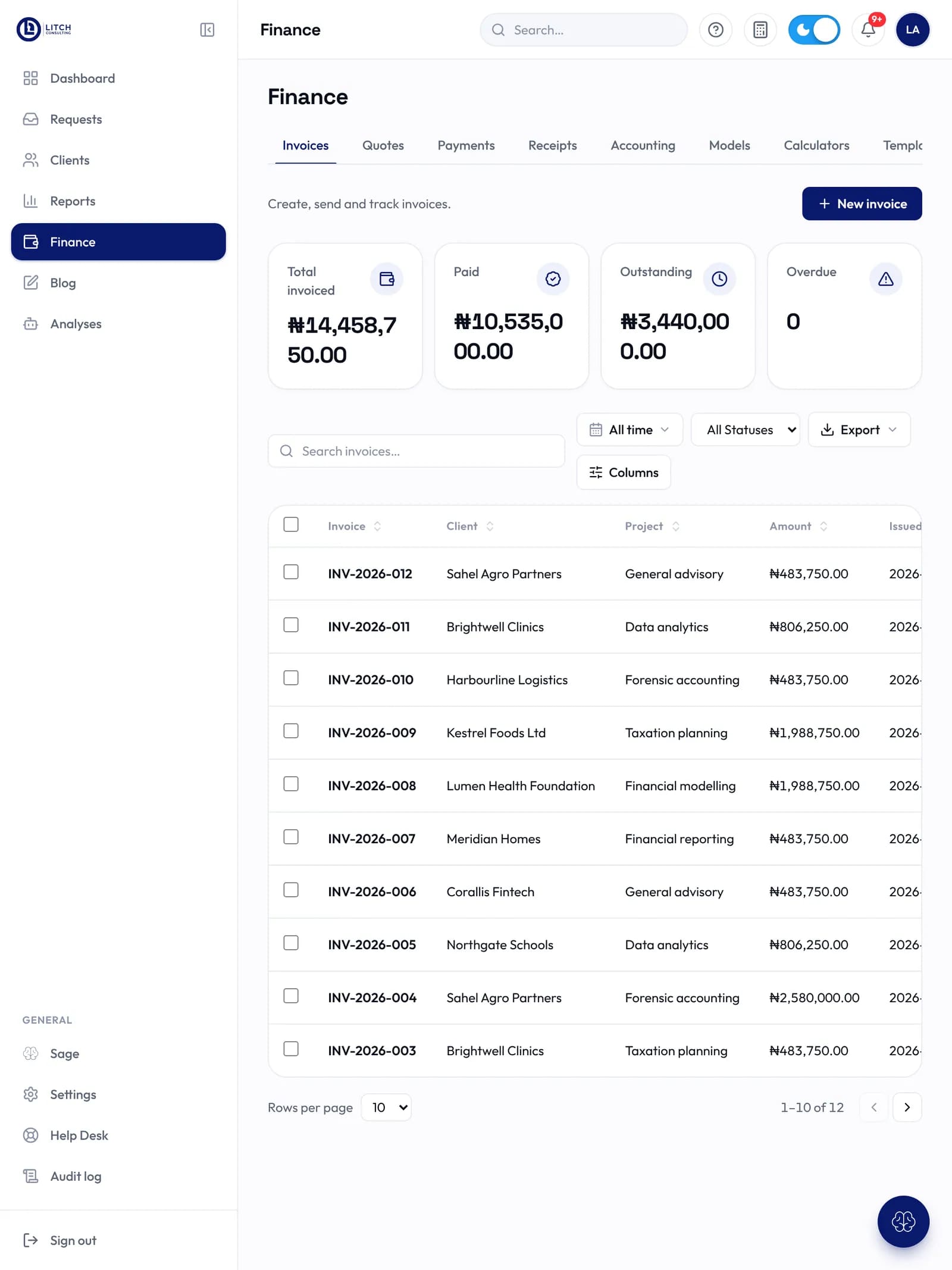
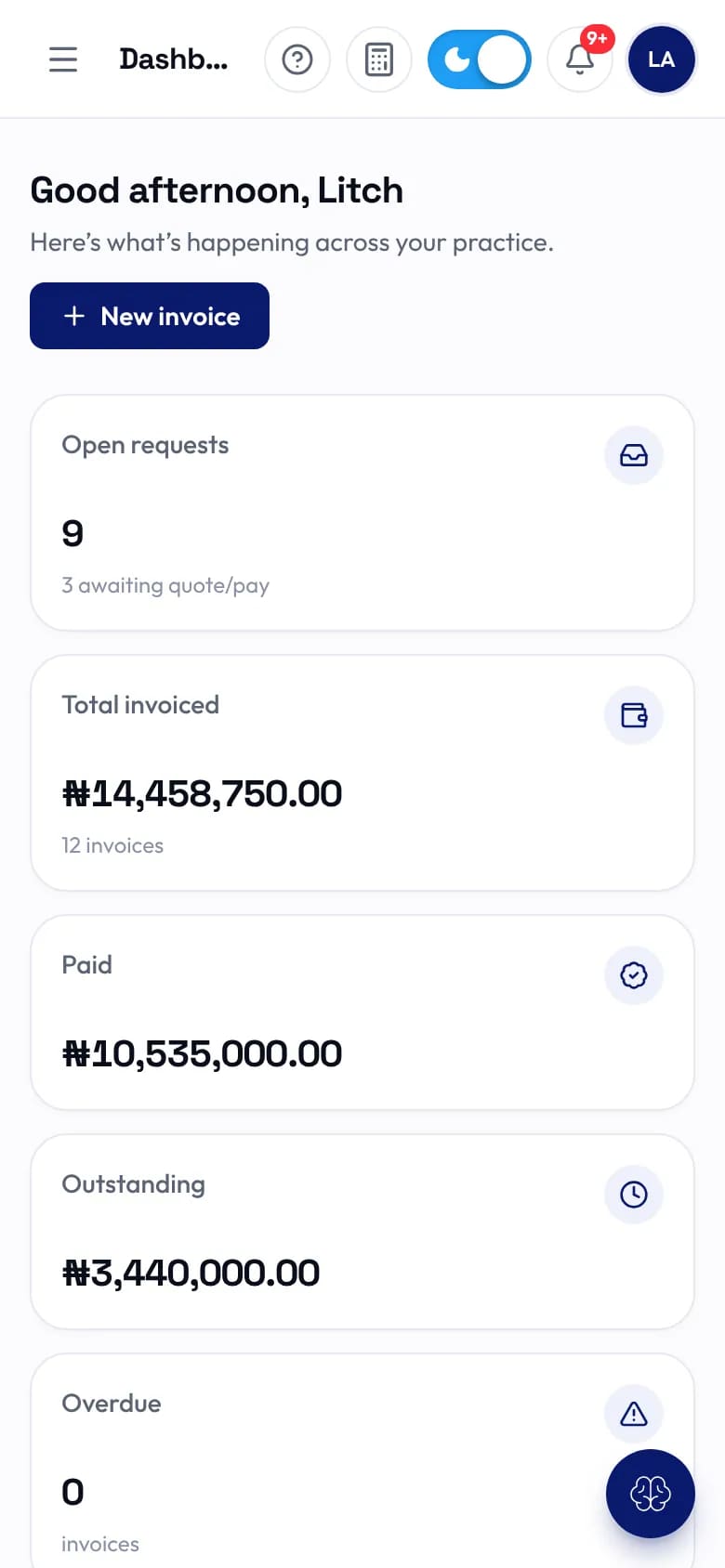
The console opens on what needs action: open requests, invoiced against paid, and what is still outstanding. Lists stay real tables at every width, so the team can work from a tablet or a phone without losing the columns that matter.
How it fits together
For prospective clients
Requests, invoices and reports
One data model: a request, its invoice and its report figure are one record
Requests, invoices and clients
Clients in this space expect numbers to look serious. Soft or overly colourful design makes them doubt the work. The current look matches the seriousness of the data.
What we delivered
Public site
- A site for prospective clients, built on the Litch identity
Console
- A request pipeline with client, service, amount and status
- Invoices with paid and outstanding, filtered by time and status, with export
- A dashboard of billed against collected
Data
- One record behind requests, invoices and reports
- Tables that stay usable at desktop, tablet and phone widths
What changed
A figure is entered once and appears correctly in the request, the invoice and the report. The team sees what is owed and what needs action the moment they sign in.